AD 2001-13-18
Applicability
| Type | Manufacturer | Model | Details |
|---|---|---|---|
| aircraft | Raytheon | Various | Airworthiness Directives; Raytheon Aircraft Company Beech Models 45 (YT-34), A45 (T-34A, B-45), and D45 (T-34B) Airplanes |
Unsafe Condition
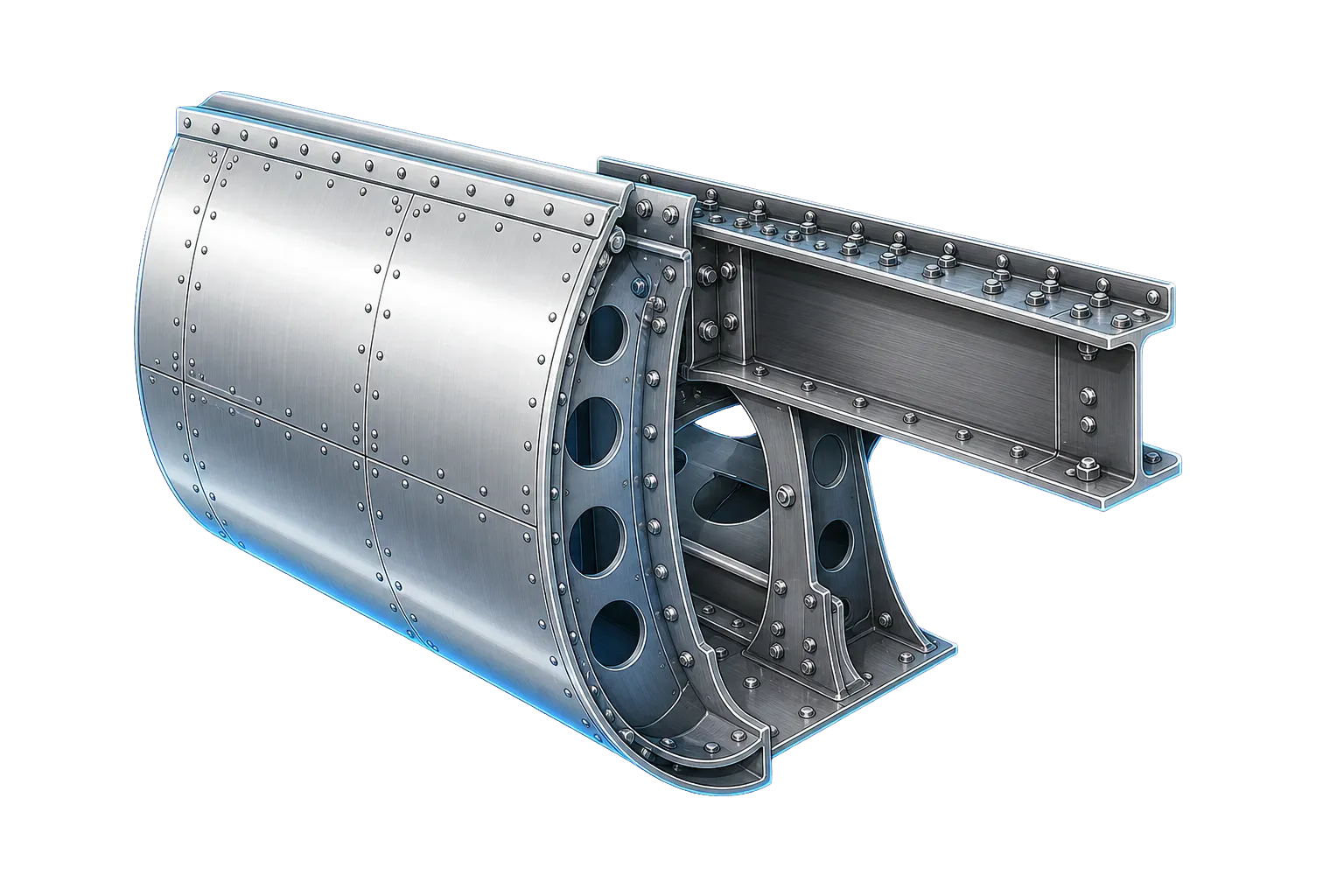
Fatigue cracks in the wing spar assemblies could lead to wing spar failure.
AI-generated summary from the source AD text. Verify against the official source before acting.
Required Actions
Repetitively inspect the wing spar assemblies for cracks. Replace any cracked wing spar assembly unless the crack is in the filler strip and directed toward the outside edge. Report the results of the initial inspection.
AI-generated summary from the source AD text. Verify against the official source before acting.
Compliance Time
Before further flight
AI-generated summary from the source AD text. Verify against the official source before acting.
Affected Aircraft
Raytheon Aircraft Company Beech Models 45 (YT-34), A45 (T-34A, B-45), and D45 (T-34B) airplanes.
AI-generated summary from the source AD text. Verify against the official source before acting.
Federal Register Abstract
This document supersedes Airworthiness Directive (AD) 99-12- 02, which currently requires flight and operating limitations on Raytheon Aircraft Corporation (Raytheon) Beech Models 45 (YT-34), A45 (T-34A, B-45), and D45 (T-34B) airplanes. AD 99-12-02 resulted from a report of an in-flight separation of the right wing on a Raytheon Beech Model A45 (T-34A) airplane. The AD was issued as an interim action until the development of FAA-approved inspection procedures. Raytheon has developed procedures to inspect the wing spar assemblies of the above-referenced airplanes. This AD requires repetitive inspections of the wing spar assembly for cracks with replacement of any wing spar assembly found cracked (unless the spar assembly has a crack indication in the filler strip where the direction of the crack is toward the outside edge of the filler strip). This AD also includes a reporting requirement of the results of the initial inspection and maintains the flight and operating restrictions required by AD 99-12-02 until accomplishment of the initial inspection. The actions specified by this AD are intended to prevent wing spar failure caused by fatigue cracks in the wing spar assemblies and ensure the operational safety of the above-referenced airplanes.
Document Text
Show stored source text (verify against official source)
[Federal Register Volume 66, Number 127 (Monday, July 2, 2001)]
[Rules and Regulations]
[Pages 34802-34806]
From the Federal Register Online via the Government Publishing Office [<a href="http://www.gpo.gov">www.gpo.gov</a>]
[FR Doc No: 01-16250]


-----------------------------------------------------------------------

DEPARTMENT OF TRANSPORTATION

Federal Aviation Administration

14 CFR Part 39

[Docket No. 2000-CE-09-AD; Amendment 39-12300; AD 2001-13-18]
RIN 2120-AA64


Airworthiness Directives; Raytheon Aircraft Company Beech Models
45 (YT-34), A45 (T-34A, B-45), and D45 (T-34B) Airplanes

AGENCY: Federal Aviation Administration, DOT.

ACTION: Final rule.

-----------------------------------------------------------------------

SUMMARY: This document supersedes Airworthiness Directive (AD) 99-12-
02, which currently requires flight and operating limitations on
Raytheon Aircraft Corporation (Raytheon) Beech Models 45 (YT-34), A45
(T-34A, B-45), and D45 (T-34B) airplanes. AD 99-12-02 resulted from a
report of an in-flight separation of the right wing on a Raytheon Beech
Model A45 (T-34A) airplane. The AD was issued as an interim action
until the development of FAA-approved inspection procedures. Raytheon
has developed procedures to inspect the wing spar assemblies of the
above-referenced airplanes. This AD requires repetitive inspections of
the wing spar assembly for cracks with replacement of any wing spar
assembly found cracked (unless the spar assembly has a crack indication
in the filler strip where the direction of the crack is toward the
outside edge of the filler strip). This AD also includes a reporting
requirement of the results of the initial inspection and maintains the
flight and operating restrictions required by AD 99-12-02 until
accomplishment of the initial inspection. The actions specified by this
AD are intended to prevent wing spar failure caused by fatigue cracks
in the wing spar assemblies and ensure the operational safety of the
above-referenced airplanes.

DATES: This AD becomes effective on August 16, 2001.
    The Director of the Federal Register approved the incorporation by
reference of certain publications listed in the regulations as of
August 16, 2001.

ADDRESSES: You may get the service information referenced in this AD
from Raytheon Aircraft Company, P.O. Box 85, Wichita, Kansas 67201-
0085; telephone: (800) 625-7043 or (316) 676-4556. You may examine this
information at FAA, Central Region, Office of the Regional Counsel,
Attention: Rules Docket No. 2000-CE-09-AD, 901 Locust, Room 506, Kansas
City, Missouri 64106; or at the Office of the Federal Register, 800
North Capitol Street, NW, suite 700, Washington, DC.

FOR FURTHER INFORMATION CONTACT: Paul Nguyen, Aerospace Engineer, FAA,
Wichita Aircraft Certification Office, 1801 Airport Road, Mid-Continent
Airport, Wichita, Kansas 67209; telephone: (316) 946-4125; facsimile:
(316) 946-4407.

SUPPLEMENTARY INFORMATION:

Events Leading to the Issuance of This AD

    Has FAA taken any action to this point? In-flight separation of the
right wing on a Raytheon Beech Model A45 (T34A) airplane caused FAA to
issue AD 99-12-02, Amendment 39-11193 (64 FR 31689, June 14, 1999).
This AD requires:

--Incorporating flight and operating limitations that restrict the
airplanes

[[Page 34803]]

to normal category operation and prohibit them from acrobatic and
utility category operations;
--Limiting the flight load factor to 0 to 2.5 G; and
--Limiting the maximum airspeed to 175 miles per hour (mph) (152
knots).

    AD 99-12-02 was issued as an interim action until the development
of FAA-approved inspection procedures.
    What has happened since AD 99-12-02 to initiate this action?
Raytheon has developed procedures to inspect the wing spar assemblies
on Raytheon Beech Models 45 (YT-34), A45 (T-34A, B-45), and D45 (T-34B)
airplanes. We have reviewed and approved the technical aspects of these
procedures.
    To address this issue, FAA issued a notice of proposed rulemaking
(NPRM) to supersede AD 99-12-02. This NPRM was published in the Federal
Register on May 5, 2000 (65 FR 26149). The NPRM proposed to supersede
AD 99-12-02 with a new AD that would require:

--Repetitively inspecting the wing spar assemblies for cracks and
replacing any cracked wing spar assembly. A crack indication in the
filler strip is allowed if the direction of the crack is toward the
outside edge of the filler strip;
--Reporting the results of the initial inspection; and
--Maintaining the flight and operating restrictions that AD 99-12-02
currently requires until accomplishing the initial inspection and
possible replacement proposed in this AD.

    The flight and operating restrictions that AD 99-12-02 currently
requires may be changed after inspection of the wing spar assemblies,
and the wing spar assembly either is replaced, is crack free, or only
has a crack indication in the filler strip where the direction of the
crack is toward the outside edge of the filler strip.
    Was the public invited to comment? The FAA encouraged interested
persons to participate in the making of this amendment. At the request
of several commenters, we issued an NPRM to extend the comment period
from July 7, 2000, to October 15, 2000. This document was published in
the Federal Register on July 5, 2000 (65 FR 41381). A summary of the
comments received on both of these documents follow, along with our
responses.

Comment Issue No. 1: Incorporate Alternative Methods of Compliance
Into the Final Rule AD Action

    What is the commenters' concern? The FAA received brief summaries
of two requests for alternative methods of compliance to the actions in
the proposed AD. Several commenters request that we incorporate each of
these alternative methods of compliance into the final rule as a
compliance option to the AD. A brief description of each alternative
method of compliance follows:

--A proposal from the T-34 Technical Committee consists of
accomplishing Raytheon SB 57-3329 as a one-time action (as long as no
cracks are found) and cold working the boltholes. This would allow the
airplanes to be operated at their original operating criteria; and
--A proposal from the T-34 Association consists of complying with parts
of Raytheon SB 57-3329 and replacing the front spars with spars from
Baron (55 and 58 series) airplanes as terminating action.

    What is FAA's response to the concern? The brief summaries of these
alternative methods of compliance do not contain sufficient data for us
to consider them to provide an acceptable level of safety at the
present time. If and when each of these groups submits the appropriate
documentation, we will evaluate each proposal to see if it meets the
safety intent of the AD. We will then approve any proposal that meets
this criteria as an AMOC to the AD.
    We are not changing the final rule as a result of these comments.

Comment Issue No. 2: Extend the Comment Period a Second Time

    What is the commenters' concern? Several commenters request an
extension to the comment period in order to have more time to finalize
alternative methods of compliance.
    What is FAA's response to the concern? As discussed previously, FAA
extended the comment period to give the public an additional 60 days to
respond. The comment period on the extension ended October 15, 2000. We
have accepted late comments since that time. We have determined that
the safety of the affected airplanes outweighs the necessity for
waiting any longer for the completion of alternative methods of
compliance, especially in light that it has been over 6 months since
the comment period for the extension ended.
    We are not changing the final rule as a result of these comments.

Comment Issue No. 3: Allow the Operating Restrictions and
Limitations Required by AD 99-12-02 Instead of the Proposed
Repetitive Inspections

    What is the commenters' concern? Several commenters request that
they be allowed to continue to implement the operating restrictions and
limitations that are currently required by AD 99-12-02 rather than be
required to accomplish the proposed repetitive inspections. These
commenters state that the fastener removal process could cause more
damage to the spars and the bolthole eddy current inspection method is
subjective. For example, the commenters reference a recent inspection
on 5 of the affected airplanes where the eddy current inspection
revealed cracks in the front spar. According to the commenter, Raytheon
then validated the inspection results and found no cracks in the front
spars.
    What is FAA's response to the concern? The FAA does not concur that
the implementation of the flight and operating restrictions that are
currently required by AD 99-12-02 should be an option to accomplishing
this AD. We recognize that the fastener removal process could cause
damage to the spars. However, the safety implications of allowing an
airplane to continue operation with a cracked spar far outweigh the
possible damage the fastener removal process could cause.
    We established the current flight restrictions that AD 99-12-02
requires as a temporary safety solution until procedures were developed
that could determine the condition of the wing spar assemblies of the
affected airplanes. Once a crack develops, it can continue to grow
through cyclic loads such as maneuvers or gusts, even while the
airplane is operating under the current flight and operating
restrictions. The only way we can ensure that the affected airplanes do
not have cracked wing spar assemblies is through the accomplishment of
this inspection and any necessary wing spar assembly replacement.
    We also recognize that the Raytheon inspection procedure has the
potential of indicating cracks when there are none. Again, the safety
implications of allowing an airplane to continue operation with a
cracked spar far outweigh the possibility of a false crack indication
from the inspection.
    We are not changing the final rule as a result of these comments.

Comment Issue No. 4: Return the Affected Airplanes to Their
Original Flight Limitations and Limit the AD to Those Airplanes in
Air Combat Operations

    What is the commenters' concern? Several commenters state that only
those airplanes that are utilized in air combat operations are subject
to the fatigue stress that warrants this AD action. The commenters
request that

[[Page 34804]]

FAA exempt those airplanes that do not fly in these operations.
    Two other commenters state that the proposed AD is not necessary
and recommend that we withdraw AD 99-12-02. These commenters also
recommend closely monitoring the operations of air combat since they
believe that is the reason for the fatigue damage to the wings of the
affected airplanes.
    What is FAA's response to the concern? Although we concur that air
combat operations reduces the fatigue life of the wing spars of the
affected airplane, fatigue problems can also exist for airplanes
involved in acrobatic maneuvers, not just air combat operations.
Therefore, we have determined that the AD is necessary for all of the
airplanes referenced in the NPRM to address the unsafe condition.
    We are not changing the final rule as a result of these comments.

Comment Issue No. 5: Change the Inspection Requirements

    What is the commenters' concern? Several commenters provided
information on the need for both initial and repetitive inspections.
Specifically they are as follows:

--One commenter states that a one-time inspection in accordance with
the service bulletin is sufficient;
--Four commenters recommend that FAA require only a visual inspection
to locate displaced rivets, signs of fatigue, unusual wear, any stress
related material, or corrosion. These commenters recommend this
inspection to coincide with annual or 100-hour time-in-service (TIS)
inspections;
--Six commenters recommend repetitive inspections at intervals of 500
hours TIS or 5 years, whichever occurs first. These commenters
recommend more intense inspections for airplanes flown in high stress
conditions;
--One commenter recommends repetitive inspections at intervals of 200
hours TIS;
--One commenter recommends no repetitive inspections if the airplane is
found crack-free during the initial inspection; and
--Another commenter recommends no repetitive inspections or at the very
least repetitive inspections at 1,000-hour TIS intervals. This
commenter also suggests more stringent inspection requirements when
cracks are found to monitor the crack growth.

    What is FAA's response to the concern? We do not concur with any of
these requests. Our analysis shows that the 80-hour TIS repetitive
inspection interval is necessary to detect cracks at the earliest time
before they progress to a point of failure. As discussed previously, we
have data that shows fatigue problems for airplanes involved in
acrobatic maneuvers as well as air combat operations.
    However, we are changing the compliance time of the initial
inspection to ``within the next 80 hours time-in-service (TIS) after
the effective date of this AD or within 12 months after the effective
date of this AD, whichever occurs later'' instead of ``* * * whichever
occurs first.'' This will give operators of high-usage airplanes 12
months to accomplish the inspection and will give those operators who
do not operate 80 hours TIS in a year more time to comply. All
operators must maintain the flight and operating restrictions required
by AD 99-12-02 until the initial inspection.

Comment Issue No. 6: Either Limit the Affected Airplanes to Utility
Category Operation or Exclude Those Airplanes Only Operating in
Utility Category

    What is the commenters' concern? One commenter requests that, since
the Model D45 (T-34B) airplanes are operated in the Utility category
and not the Acrobatic category, the AD should not apply to these
airplanes. Another commenter recommends that FAA require all affected
airplanes to operate according to Utility category operating
requirements after accomplishing the initial inspection.
    What is FAA's response to the concern? We do not concur with these
requests. We can neither exempt the Model D-45 (T-34B) airplanes from
the AD nor can we change the operational category of all of the
affected airplanes because the wings of the Model A45 (T-34A, B-45) are
interchangeable with wings of the Model D45 (T-34B) airplanes. Field
experience reveals that the wings of these airplanes have been
interchanged. We have no assurance that reliable records exist of wing
interchange between these airplanes. Therefore, we have determined
that, if we incorporated these requests, an unsafe condition could
exist or develop on these airplanes.
    We are not changing the final rule as a result of these comments.

Comment Issue No. 7: Correct the Airspeed Indicator Glass
Modification Information in the AD

    What is the commenters' concern? One commenter requests that FAA
change the information from the modification to the red radial line on
the airspeed indicator glass from 225 miles per hour (mph) to 252 mph.
This commenter also states that the word ``edge'' should be added after
the word ``outside'' in the fourth bullet in paragraph (e)(4)(iv)(A) of
the NPRM.
    What is FAA's response to the concern? We concur with these
changes. Since these are the type-certificated operating limitations,
we are not repeating these in the final rule.

Comment Issue No. 8: Withdraw the NPRM and AD 99-12-02

    What is the commenters' concern? Several commenters state that FAA
should not only withdraw the NPRM, but should also withdraw AD 99-12-
02. The commenters believe that we have no justification for issuing
either of these regulatory documents.
    What is FAA's response to the concern? We do not concur with these
comments. Our decision to issue AD 99-12-02 was based on our analysis
and examination of all available data concerning an in-flight
separation of the right wing on a Raytheon Beech Model A45 (T-34A)
airplane. Our decision to issue the NPRM was based on the development
of inspection procedures that when accomplished would allow the
airplane to operate in accordance with the original flight and
operating restrictions. As discussed earlier in this document, we have
determined that the unsafe condition is addressed by:

--Repetitively inspecting the wing spar assembly for cracks and
replacing any wing spar assembly found cracked (unless the spar
assembly has a crack indication in the filler strip where the direction
of the crack is toward the outside edge of the filler strip); and
--Continuing the flight and operating restrictions required by AD 99-
12-02 until the initial inspection is accomplished.

    We are not making any changes to the final rule based on these
comments.

FAA's Determination and Provisions of the AD

    What is FAA's Final Determination on this Issue? After careful
review of all available information related to the subject presented
above, we have determined that air safety and the public interest
require the adoption of the rule as proposed except for the change in
the initial inspection compliance time and minor editorial corrections.
We determined that this compliance time change and the minor editorial
corrections:

--Will not change the meaning of the AD; and
Will not add any additional burden upon the public than was already

[[Page 34805]]

proposed (the compliance time change actually reduces the burden of
when the inspection must be accomplished).

    Why is the compliance of the initial inspection in hours time-in-
service (TIS) and calendar time? We have established the compliance
time of the initial inspection at the next 80 hours TIS or 12 months
with the prevalent one being that which occurs later. This will give
operators of high-usage airplanes 12 months to accomplish the
inspection and will give those operators who do not operate 80 hours
TIS in a year more time to comply. All operators must maintain the
flight and operating restrictions required by AD 99-12-02 until the
initial inspection. We have determined that the dual compliance time
will ensure that the safety issue is addressed in a timely manner
without inadvertently grounding any of the affected airplanes.
    How many airplanes does this AD impact? The FAA estimates that this
AD affects 476 airplanes in the U.S. registry.
    What is the cost impact of the initial inspection on owners/
operators of the affected airplanes? We estimate that it will take
approximately 241 workhours per airplane to accomplish the initial
inspection, at an average labor rate of $60 an hour. Based on these
figures, FAA estimates the cost impact of the initial inspection on
U.S. operators at $6,882,960, or $14,460 per airplane.
    What about the cost of repetitive inspections and replacements? The
figures above only take into account the cost of the initial inspection
and do not take into account the cost of repetitive inspections or the
cost to replace a cracked wing spar assembly. We have no way of
determining the number of repetitive inspections each owner/operator
will incur over the life of an affected airplane or the number of
airplanes that will have a cracked wing spar(s) and need replacement.
    The cost of each repetitive inspection will be $1,860 per airplane
(31 workhours  x  $60 per hour).
    Raytheon no longer produces wings spars for the affected airplanes.
If a wing spar is found cracked, you will have to install an FAA-
approved wing spar configuration in order to continue to operate the
airplane. For cost estimate purposes, we are using information on
installing a Raytheon Beech 55 or 58 series airplane wing spar on a
Raytheon Beech Model A45 airplane in accordance with Supplemental Type
Certificate (STC) No. SA5521NM. Nogle and Black Aviation, Inc., owns
this STC. The cost to replace a cracked wing spar through this STC will
be $14,100 (160 workhours  x  $60 per hour plus $4,500 for parts). The
airplane will still be subject to the inspection requirements in this
AD.

Regulatory Impact

    Does this AD impact various entities? The regulations adopted
herein will not have a substantial direct effect on the States, on the
relationship between the national government and the States, or on the
distribution of power and responsibilities among the various levels of
government. Therefore, it is determined that this final rule does not
have federalism implications under Executive Order 13132.
    Does this AD involve a significant rule or regulatory action? For
the reasons discussed above, I certify that this action (1) is not a
``significant regulatory action'' under Executive Order 12866; (2) is
not a ``significant rule'' under DOT Regulatory Policies and Procedures
(44 FR 11034, February 26, 1979); and (3) will not have a significant
economic impact, positive or negative, on a substantial number of small
entities under the criteria of the Regulatory Flexibility Act. A copy
of the final evaluation prepared for this action is contained in the
Rules Docket. A copy of it may be obtained by contacting the Rules
Docket at the location provided under the caption ADDRESSES.

List of Subjects in 14 CFR Part 39

    Air transportation, Aircraft, Aviation safety, Incorporation by
reference, Safety.

Adoption of the Amendment

    Accordingly, under the authority delegated to me by the
Administrator, the Federal Aviation Administration amends part 39 of
the Federal Aviation Regulations (14 CFR part 39) as follows:

PART 39--AIRWORTHINESS DIRECTIVES

    1. The authority citation for part 39 continues to read as follows:

    Authority: 49 U.S.C. 106(g), 40113, 44701.


Sec. 39.13  [Amended]

    2. FAA amends Sec. 39.13 by removing Airworthiness Directive (AD)
99-12-02, Amendment 39-11193 (64 FR 31689, June 14, 1999), and by
adding a new AD to read as follows:

2001-13-18  Raytheon Aircraft Company: Amendment 39-12300; Docket
No. 2000-CE-09-AD, Supersedes AD 99-12-02, Amendment 39-11193.

    (a) What airplanes are affected by this AD? This AD applies to
Beech Models 45 (YT-34), A45 (T-34A, B-45), and D45 (T-34B)
airplanes, all serial numbers, certificated in any category.
    (b) Who must comply with this AD? Anyone who wishes to operate
any of the above airplanes must comply with this AD.
    (c) What problem does this AD address? The actions specified by
this AD are intended to detect and correct cracks in the wing spar
assemblies and ensure the operational safety of the above-referenced
airplanes.
    (d) What actions must I accomplish to address this problem? To
address this problem, you must maintain the actions of AD 99-12-02
(superseded by this AD) that are outlined in paragraphs (d)(1),
(d)(2), and (d)(3) of this AD, including all subparagraphs, until
you accomplish the initial inspection required in paragraph (d)(5)
of this AD (paragraphs d(1)-(d)(4) are actions retained from AD 99-
12-02, and paragraphs (d)(5)-(d)(7) on actions new to this AD:

------------------------------------------------------------------------
                                                          In accordance
            Action                       When                 with
------------------------------------------------------------------------
    (1) Accomplish the          All actions required    Not Applicable.
     following placard           prior to further
     requirements:               flight after July 9,
    (i) Fabricate two placards   1999 (the effective
     using letters of at least   date of AD 99-12-02),
     \1/10\-inch in height       unless already
     with each consisting of     accomplished
     the following words:
     ``Never exceed speed, Vne-
     175 MPH (152 knots) IAS;
     Normal Acceleration (G)
     Limits 0, and +2.5;
     ACROBATIC MANEUVERS
     PROHIBITED.
    (ii) Install these
     placards on the airplane
     instrument panels (one on
     the front panel and one
     on the rear panel) next
     to the airspeed
     indicators within the
     pilot's clear view.
    (iii) Insert a copy of
     this AD into the
     Limitations Section on
     the Airplane Flight
     Manual (AFM).

[[Page 34806]]


(2) Modify each airspeed
 indicator glass by
 accomplishing the following:
    (i) Place a red radial      All actions required    Not Applicable.
     line on each indicator      within 10 hours time-
     glass at 175 miles per      in-service (TIS)
     hour (mph) (152 knots).     after July 9, 1999
                                 (the effective date
                                 of AD 99-12-02),
                                 unless already
                                 accomplished
    (ii) Place a white
     slippage index mark
     between each airspeed
     indicator glass and case
     to visually verify that
     the glass has not rotated.
(3) Mark the outside surface
 of the ``g'' meters with
 lines of approximately \1/16\-
 inch by \3/16\-inch, as
 follows:
    (i) A red line at 0 and     All actions required    Not Applicable.
     2.5; and.                   within 10 hours time-
                                 in-service (TIS)
                                 after July 9, 1999
                                 (the effective date
                                 of AD 99-12-02),
                                 unless already
                                 accomplished
    (ii) A white slippage mark
     between each ``g'' meter
     glass and case to
     visually verify that the
     glass has not rotated.
(4) The actions required by     Upon accomplishment of  Raytheon
 paragraph (d)(1), (d)(2), and   the initial             Aircraft
 (d)(3) are no longer required   inspection required     Mandatory
 after the initial inspection    in paragraph (d)(5)     Service
 required in paragraph (d)(5)    of this AD, unless      Bulletin No. SB
 of this AD is accomplished.     already accomplished    57-3329,
                                                         Issued:
                                                         February, 2000.
(5) Inspect the wing spar       Initially inspect       Raytheon
 assemblies for cracks           within the next 80      Aircraft
                                 hours time-in-service   Mandatory
                                 (TIS) after August      Service
                                 16, 2001 (the           Bulletin No. SB
                                 effective date of       57-3329,
                                 this AD) or within 12   Issued:
                                 months after August     February, 2000.
                                 16, 2001 (the
                                 effective date of
                                 this AD), whichever
                                 occurs later, unless
                                 already accomplished.
                                 Inspect thereafter at
                                 intervals not to
                                 exceed 80 hours TIS
(6) Replace any cracked wing    Prior to further        The applicable
 spar assembly. A crack          flight after the        maintenance
 indication in the filler        required inspection     manual.
 strip is allowed if the         where the cracked
 direction of the crack is       wing spar assembly is
 toward the outside edge of      found
 the filler strip. If the
 direction of the crack is
 toward the inside edge of the
 filler strip or any crack is
 found in any other area, you
 must replace the cracked wing
 spar assembly
(7) Submit a report to FAA      Within 10 days after    Page 58 through
 that describes the damage       the initial             60 of Raytheon
 found on the wing spar. Use     inspection or within    Aircraft
 the chart on pages 58 through   10 days after August    Mandatory
 60 of Raytheon Aircraft         16, 2001 (the           Service
 Mandatory Service Bulletin      effective date of       Bulletin No. SB
 No. SB 57-3329, Issued:         this AD), whichever     57-3329,
 February, 2000                  occurs later, unless    Issued:
                                 already accomplished    February, 2000.
    (i) Submit this report
     even if no cracks are
     found.
    (ii) Submit this report to
     FAA at the address found
     in paragraph (f) of this
     AD.
------------------------------------------------------------------------

    (e) Can I comply with this AD in any other way? You may use an
alternative method of compliance or adjust the compliance time if:
    (1) Your alternative method of compliance provides an equivalent
level of safety; and
    (2) The Manager, Wichita Aircraft Certification Office (ACO),
approves your alternative. Submit your request through an FAA
Principal Maintenance Inspector, who may add comments and then send
it to the Manager, Wichita ACO.

    Note: This AD applies to each airplane identified in paragraph
(a) of this AD, regardless of whether it has been modified, altered,
or repaired in the area subject to the requirements of this AD. For
airplanes that have been modified, altered, or repaired so that the
performance of the requirements of this AD is affected, the owner/
operator must request approval for an alternative method of
compliance in accordance with paragraph (e) of this AD. The request
should include an assessment of the effect of the modification,
alteration, or repair on the unsafe condition addressed by this AD;
and, if you have not eliminated the unsafe condition, specific
actions you propose to address it.

    (3) The one alternative method of compliance approved in
accordance with AD 99-12-02, which is superseded by this AD, is
approved as an alternative method of compliance with this AD.
    (f) Where can I get information about any already-approved
alternative methods of compliance? Contact Paul Nguyen, Aerospace
Engineer, Wichita Aircraft Certification Office, FAA, 1801 Airport
Road, Mid-Continent Airport, Wichita, Kansas 67209; telephone: (316)
946-4125; facsimile: (316) 946-4407.
    (g) What if I need to fly the airplane to another location to
comply with this AD? FAA can issue a special flight permit under
sections 21.197 and 21.199 of the Federal Aviation Regulations (14
CFR 21.197 and 21.199) to operate your airplane to a location where
you can accomplish the requirements of this AD.
    (h) Are any service bulletins incorporated into this AD by
reference? You must accomplish the actions required by this AD in
accordance with Raytheon Aircraft Mandatory Service Bulletin No. SB
57-3329, Issued: February, 2000. The Director of the Federal
Register approved this incorporation by reference under 5 U.S.C.
552(a) and 1 CFR part 51. You can get copies from Raytheon Aircraft
Corporation, P.O. Box 85, Wichita, Kansas 67201-0085. You can look
at copies at FAA, Central Region, Office of the Regional Counsel,
901 Locust, Room 506, Kansas City, Missouri, or at the Office of the
Federal Register, 800 North Capitol Street, NW., suite 700,
Washington, DC.
    (i) Does this AD action affect any existing AD actions? This
amendment supersedes AD 99-12-02, Amendment 39-11193.
    (j) When does this amendment become effective? This amendment
becomes effective on August 16, 2001.

    Issued in Kansas City, Missouri, on June 22, 2001.
Michael Gallagher,
Manager, Small Airplane Directorate, Aircraft Certification Service.
[FR Doc. 01-16250 Filed 6-29-01; 8:45 am]
BILLING CODE 4910-13-P
Source: Official FAA Source ↗
Retrieved: Apr 6, 2026
Rights: U.S. Government Public Domain
This site is not affiliated with or endorsed by the FAA. Always verify with official sources.