AD 2001-21-01
Applicability
| Type | Manufacturer | Model | Details |
|---|---|---|---|
| aircraft | Dornier Luftfahrt GmbH | Dornier 228-100 | Airworthiness Directives; Dornier Luftfahrt GmbH Models 228-100, 228-101, 228-200, 228-201, 228-202, and 228-212 Airplanes |
| aircraft | Dornier Luftfahrt GmbH | Dornier 228-101 | Airworthiness Directives; Dornier Luftfahrt GmbH Models 228-100, 228-101, 228-200, 228-201, 228-202, and 228-212 Airplanes |
| aircraft | Dornier Luftfahrt GmbH | Dornier 228-200 | Airworthiness Directives; Dornier Luftfahrt GmbH Models 228-100, 228-101, 228-200, 228-201, 228-202, and 228-212 Airplanes |
| aircraft | Dornier Luftfahrt GmbH | Dornier 228-201 | Airworthiness Directives; Dornier Luftfahrt GmbH Models 228-100, 228-101, 228-200, 228-201, 228-202, and 228-212 Airplanes |
| aircraft | Dornier Luftfahrt GmbH | Dornier 228-202 | Airworthiness Directives; Dornier Luftfahrt GmbH Models 228-100, 228-101, 228-200, 228-201, 228-202, and 228-212 Airplanes |
| aircraft | Dornier Luftfahrt GmbH | Dornier 228-212 | Airworthiness Directives; Dornier Luftfahrt GmbH Models 228-100, 228-101, 228-200, 228-201, 228-202, and 228-212 Airplanes |
Unsafe Condition
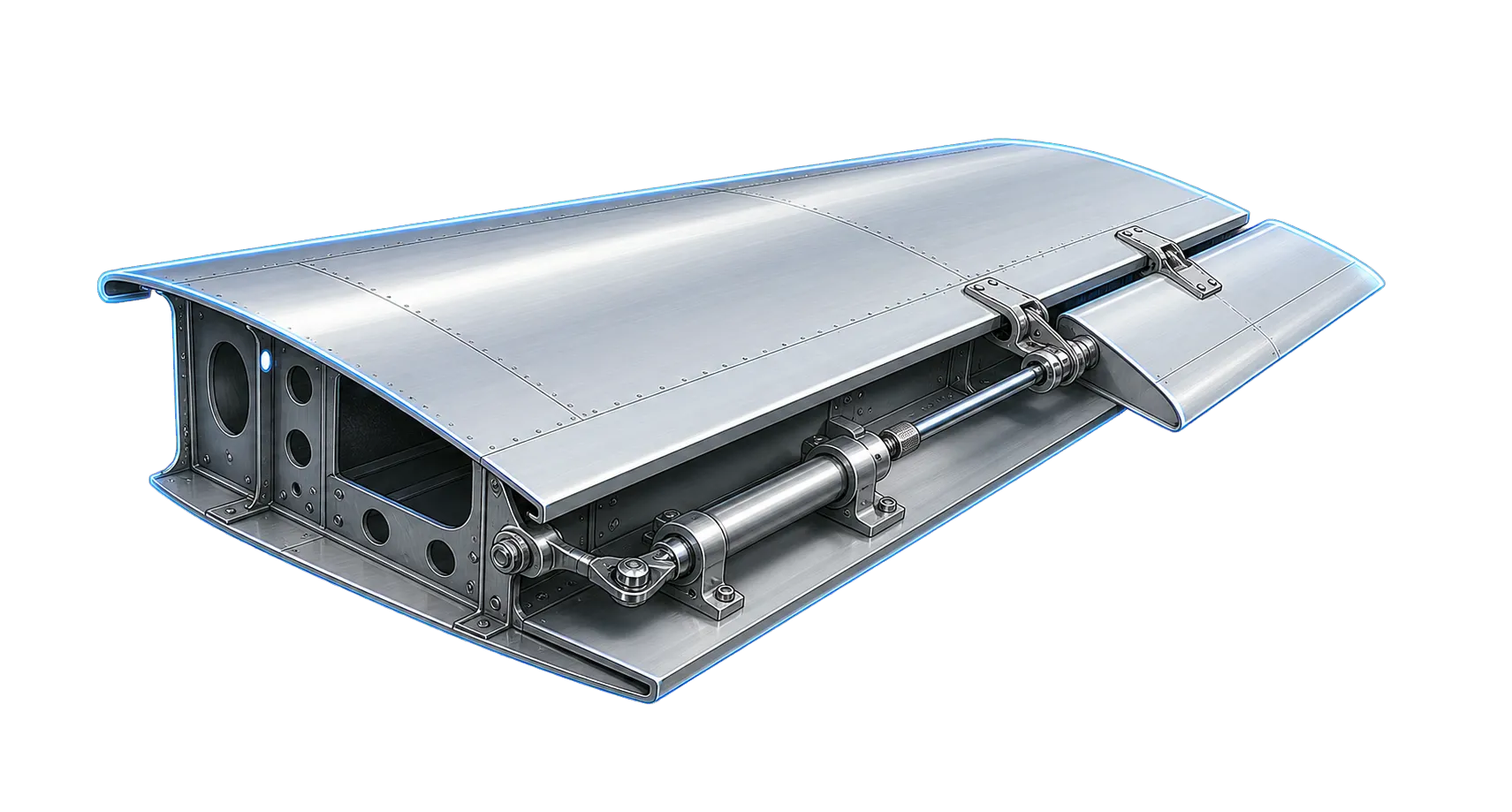
Corrosion and material fatigue causing cracks around the riveted joints of the leading edge skin and ribs of the horizontal stabilizer, which could lead to in-flight separation of the horizontal stabilizer skin and consequent loss of control of the airplane.
AI-generated summary from the source AD text. Verify against the official source before acting.
Required Actions
Repetitively inspect the horizontal stabilizer skin and ribs for damage and cracks, and repair any damaged skin or cracked ribs. Initial inspection must be completed within 100 hours time-in-service after the effective date, with subsequent inspections at intervals not exceeding 100 hours time-in-service. Any necessary repairs or replacements must be completed prior to further flight after inspection.
AI-generated summary from the source AD text. Verify against the official source before acting.
Compliance Time
Initial inspection within 100 hours time-in-service after the effective date; repetitive inspections at intervals not exceeding 100 hours time-in-service; repairs or replacements prior to further flight after inspection.
AI-generated summary from the source AD text. Verify against the official source before acting.
Affected Aircraft
Dornier Luftfahrt GmbH Models 228-100, 228-101, 228-200, 228-201, 228-202, and 228-212 airplanes, with specific serial number ranges for Models 228-100 and 228-101 (7003 through 7116, 7167, and 7168), and all serial numbers beginning with 8002 for Models 228-200, 228-201, 228-202, and 228-212.
AI-generated summary from the source AD text. Verify against the official source before acting.
Federal Register Abstract
This amendment adopts a new airworthiness directive (AD) that applies to certain Dornier Luftfahrt GmbH (Dornier) Models 228-100, 228-101, 228-200, 228-201, 228-202, and 228-212 airplanes. This AD requires you to repetitively inspect the horizontal stabilizer skin and ribs for damage and cracks and repair any damaged skin or cracked ribs. This AD is the result of mandatory continuing airworthiness information (MCAI) issued by the airworthiness authority for Germany. The actions specified by this AD are intended to detect and correct damage and fatigue cracks in the horizontal stabilizer skin and ribs. This condition could cause in-flight separation of the horizontal stabilizer skin with consequent loss of control of the airplane.
Document Text
Show stored source text (verify against official source)
[Federal Register Volume 66, Number 203 (Friday, October 19, 2001)]
[Rules and Regulations]
[Pages 53080-53083]
From the Federal Register Online via the Government Publishing Office [<a href="http://www.gpo.gov">www.gpo.gov</a>]
[FR Doc No: 01-26001]


=======================================================================
-----------------------------------------------------------------------

DEPARTMENT OF TRANSPORTATION

Federal Aviation Administration

14 CFR Part 39

[Docket No. 2001-CE-19-AD; Amendment 39-12471; AD 2001-21-01]
RIN 2120-AA64


Airworthiness Directives; Dornier Luftfahrt GmbH Models 228-100,
228-101, 228-200, 228-201, 228-202, and 228-212 Airplanes

AGENCY: Federal Aviation Administration, DOT.

ACTION: Final rule.

-----------------------------------------------------------------------

[[Page 53081]]

SUMMARY: This amendment adopts a new airworthiness directive (AD) that
applies to certain Dornier Luftfahrt GmbH (Dornier) Models 228-100,
228-101, 228-200, 228-201, 228-202, and 228-212 airplanes. This AD
requires you to repetitively inspect the horizontal stabilizer skin and
ribs for damage and cracks and repair any damaged skin or cracked ribs.
This AD is the result of mandatory continuing airworthiness information
(MCAI) issued by the airworthiness authority for Germany. The actions
specified by this AD are intended to detect and correct damage and
fatigue cracks in the horizontal stabilizer skin and ribs. This
condition could cause in-flight separation of the horizontal stabilizer
skin with consequent loss of control of the airplane.

DATES: This AD becomes effective on November 30, 2001.
    The Director of the Federal Register approved the incorporation by
reference of certain publications listed in the regulations as of
November 30, 2001.

ADDRESSES: You may get the service information referenced in this AD
from Fairchild/Dornier, Customer Support, P.O. Box 1103, D-82230
Wessling, Federal Republic of Germany; telephone: (011) 49 8153 300;
facsimile: (011) 49 8153 304463. You may view this information at the
Federal Aviation Administration (FAA), Central Region, Office of the
Regional Counsel, Attention: Rules Docket No. 2001-CE-19-AD, 901
Locust, Room 506, Kansas City, Missouri 64106; or at the Office of the
Federal Register, 800 North Capitol Street, NW, suite 700, Washington,
DC.

FOR FURTHER INFORMATION CONTACT: Karl Schletzbaum, Aerospace Engineer,
FAA, Small Airplane Directorate, 901 Locust, Room 301, Kansas City,
Missouri 64106; telephone: (816) 329-4146; facsimile: (816) 329-4090.

SUPPLEMENTARY INFORMATION:

Discussion

What Events Have Caused This AD?

     The Luftfahrt-Bundesamt (LBA), which is the airworthiness
authority for Germany, recently notified the FAA that an unsafe
condition may exist on certain Dornier Models 228-100, 228-101, 228-
200, 228-201, 228-202, and 228-212 airplanes. The LBA reports two
occurrences of cracks found around the riveted joints of the leading
edge skin and ribs of the horizontal stabilizer during an inspection.
The LBA reports that the cracks are caused by corrosion and material
fatigue.

What Is the Potential Impact if FAA Took No Action?

    If this condition is not detected and corrected, in-flight
separation of the horizontal stabilizer skin could result with
consequent loss of control of the airplane.

Has FAA Taken Any Action to This Point?

    We issued a proposal to amend part 39 of the Federal Aviation
Regulations (14 CFR part 39) to include an AD that would apply to
certain Dornier Models 228-100, 228-101, 228-200, 228-201, 228-202, and
228-212 airplanes. This proposal was published in the Federal Register
as a notice of proposed rulemaking (NPRM) on August 21, 2001 (66 FR
43815). The NPRM proposed to require you to inspect the horizontal
stabilizer ribs for cracks; inspect the horizontal stabilizer skin for
cracks and damage around the riveted joints; repair or replace any
cracked ribs; and repair any damaged skin.

Is There a Modification I Can Incorporate Instead of Repetitively
Inspecting the Horizontal Stabilizer Structure?

    The FAA has determined that long-term continued operational safety
would be better assured by design changes that remove the source of the
problem rather than by repetitive inspections or other special
procedures. With this in mind, we will continue to work with Dornier in
collecting information and in performing fatigue analysis to determine
whether a future design change may be necessary.

Was the Public Invited To Comment?

    The FAA encouraged interested persons to participate in the making
of this amendment. We did not receive any comments on the proposed rule
or on our determination of the cost to the public.

FAA's Determination

What Is FAA's Final Determination on This Issue?

    After careful review of all available information related to the
subject presented above, we have determined that air safety and the
public interest require the adoption of the rule as proposed except for
minor editorial corrections. We have determined that these minor
corrections:

--Provide the intent that was proposed in the NPRM for correcting the
unsafe condition; and
--Do not add any additional burden upon the public than was already
proposed in the NPRM.

Cost Impact

How Many Airplanes Does This AD Impact?

    We estimate that this AD affects 14 airplanes in the U.S. registry.

What Is the Cost Impact of This AD on Owners/Operators of the Affected
Airplanes?

    We estimate the following costs to accomplish the inspection:

----------------------------------------------------------------------------------------------------------------
                                                               Total cost  per
             Labor cost                      Parts cost            airplane       Total cost on  U.S. operators
----------------------------------------------------------------------------------------------------------------
4 workhours  x  $60 per hour = $240.  No parts required for              $240   $240  x  14 = $3,360
                                       the inspection.
----------------------------------------------------------------------------------------------------------------

    We have no method of determining the number of repetitive
inspections each owner/operator will incur over the life of each of the
affected airplanes so the cost impact is based on the initial
inspection.
    We have no method of determining the number of repairs or
replacements each owner/operator will incur over the life of each of
the affected airplanes based on the results of the inspections. We have
no way of determining the number of airplanes that may need such
repair. The extent of damage may vary on each airplane.

Compliance Time of This AD

What Is the Compliance Time of This AD?

    The compliance time of this AD will be to accomplish the initial
inspection ``within the next 100 hours time-in-service (TIS) after the
effective date of this AD'', repetitive inspections at ``intervals not
to exceed 100 hours TIS'', and any necessary repairs or replacements
``prior to further flight after the inspection.''

Why Is the Initial Inspection Compliance Time of the German AD
Different From the Initial Inspection Compliance Time in This AD?

    The German AD requires (on Dornier Models 228-100, 228-101, 228-
200, 228-201, 228-202, and 228-212

[[Page 53082]]

airplanes registered in Germany) the initial inspection within the next
10 flight hours. This is the compliance time specified in the service
information. We do not have justification to require the initial
inspection within 10 flight hours. We use a compliance time such as
this when we have identified an urgent safety of flight situation. We
believe that 100 hours TIS will give the owners/operators of the
affected airplanes enough time to have the initial inspection and
repairs and/or replacements accomplished without compromising the
safety of the airplanes.
    By accomplishing both the initial inspection and replacement at the
same time, the owners/operators of the affected airplanes only have
their airplanes out of service once instead of twice.

Regulatory Impact

Does This AD Impact Various Entities?

    The regulations adopted herein will not have a substantial direct
effect on the States, on the relationship between the national
government and the States, or on the distribution of power and
responsibilities among the various levels of government. Therefore, it
is determined that this final rule does not have federalism
implications under Executive Order 13132.

Does This AD Involve a Significant Rule or Regulatory Action?

    For the reasons discussed above, I certify that this action (1) is
not a ``significant regulatory action'' under Executive Order 12866;
(2) is not a ``significant rule'' under DOT Regulatory Policies and
Procedures (44 FR 11034, February 26, 1979); and (3) will not have a
significant economic impact, positive or negative, on a substantial
number of small entities under the criteria of the Regulatory
Flexibility Act. A copy of the final evaluation prepared for this
action is contained in the Rules Docket. A copy of it may be obtained
by contacting the Rules Docket at the location provided under the
caption ADDRESSES.

List of Subjects in 14 CFR Part 39

    Air transportation, Aircraft, Aviation safety, Incorporation by
reference, Safety.

Adoption of the Amendment

    Accordingly, under the authority delegated to me by the
Administrator, the Federal Aviation Administration amends part 39 of
the Federal Aviation Regulations (14 CFR part 39) as follows:

PART 39--AIRWORTHINESS DIRECTIVES

    1. The authority citation for part 39 continues to read as follows:

    Authority: 49 U.S.C. 106(g), 40113, 44701.


Sec. 39.13  [Amended]

    2. FAA amends Sec. 39.13 by adding a new AD to read as follows:


2001-21-01  Dornier Luftfahrt GMBH: Amendment 39-12471; Docket No.
2001-CE-19-AD.

    (a) What airplanes are affected by this AD? This AD affects the
following airplane models and serial numbers that are certificated
in any category;

------------------------------------------------------------------------
               Model                             Serial Nos.
------------------------------------------------------------------------
228-100...........................  7003 through 7116, 7167 and 7168.
228-101...........................  7003 through 7116, 7167 and 7168.
228-200...........................  All serial numbers beginning with
                                     8002.
228-201...........................  All serial numbers beginning with
                                     8002.
228-202...........................  All serial numbers beginning with
                                     8002.
228-212...........................  All serial numbers beginning with
                                     8002.
------------------------------------------------------------------------

    (b) Who must comply with this AD? Anyone who wishes to operate
any of the above airplanes must comply with this AD.
    (c) What problem does this AD address? The actions specified by
this AD are intended to detect and correct damage and fatigue cracks
in the horizontal stabilizer skin and ribs. This condition could
cause in-flight separation of the horizontal stabilizer skin with
consequent loss of control of the airplane.
    (d) What actions must I accomplish to address this problem? To
addreess this problem, you must accomplish the following:

------------------------------------------------------------------------
           Actions                 Compliance            Procedures
------------------------------------------------------------------------
Perform the following         Within the next 100   In accordance with
 inspections:.                 hours time-in-        the ACCOMPLISHMENT
(i) Inspect, using a           service (TIS) after   INSTRUCTIONS
 boroscope (or equivalent),    November 30, 2001     section of
 the horizontal stabilizer     (the effective date   Fairchild/Dornier
 ribs for cracks.              of this AD), and      Service Bulletin
(ii) Inspect the horizontal    thereafter at         No. SB-228-234,
 stabilizer skin for damage    intervals not-to-     dated October 13,
 (cracks and/or loose          exceed 100 hours      2000, and the
 rivets).                      TIS.                  applicable aircraft
                                                     maintenance manual.
(2) Repair or replace any     Prior to further      In accordance with
 cracked rib and repair any    flight after the      the applicable
 damage to he horizontal       inspection required   structural repair
 stabilizer skin found         in paragraph (d)(1)   manual.
 during any inspection         of this AD.
 required in paragraph
 (d)(1) of this AD.
(3) Report any cracks or      Prior to further      In accordance with
 damage found during the       flight after the      the ACCOMPLISHMENT
 initial inspections           applicable            INSTRUCTIONS
 required in paragraph         inspection required   section of
 (d)(1)(i) and (d)(1)(ii) of   in paragraph (d)(1)   Fairchild/Dornier
 this AD to Fairchild/         of this AD, or        Service Bulletin
 Dornier Customer Support,     within 10 days        No. SB-228-234,
 through the FAA.              after November 30,    dated October 13,
 Information collection        2001 (the effective   2000. Fill out the
 requirements contained in     date of this AD),     compliance form.
 this regulation have been     whichever occurs      Send it to Fair/
 approved by the Office of     later.                Dornier at the
 Management and Budget (OMB)                         address specified
 under the provisions of the                         in paragraph (h) of
 Paperwork Reduction Act of                          this AD and send a
 1980 (44 U.S.C. 3501 et                             copy to FAA at the
 seq.) and have been                                 address in
 assigned OMB Control Number                         paragraph (f) of
 2120-0056.                                          this AD.
------------------------------------------------------------------------

    (e) Can I comply with this AD in any other way? You may use an
alternative method of compliance or adjust the compliance time if:
    (1) Your alternative method of compliance provides an equivalent
level of safety; and
    (2) The Manager, Small Airplane Directorate, approves your
alternative. Submit your request through an FAA Principal
Maintenance Inspector, who may add comments and then send it to the
Manager, Small Airplane Directorate.

    Note 1: This AD applies to each airplane identified in paragraph
(a) of this AD, regardless of whether it has been modified, altered,
or repaired in the area subject to the requirements of this AD. For
airplanes that have been modified, altered, or repaired so that the
performance of the requirements of this AD is affected, the owner/
operator must request approval for an alternative method of
compliance in accordance with paragraph (e) of this AD. The request
should include an assessment of the effect of the modification,
alteration, or repair on the unsafe condition

[[Page 53083]]

addressed by this AD; and, if you have not eliminated the unsafe
condition, specific actions you propose to address it.

    (f) Where can I get information about any already-approved
alternative methods of compliance? Contact Karl Schletzbaum,
Aerospace Engineer, FAA, Small Airplane Directorate, 901 Locust,
Room 301, Kansas City, Missouri 64106; telephone: (816) 329-4146;
facsimile: (816) 329-4090.
    (g) What if I need to fly the airplane to another location to
comply with this AD? The FAA can issue a special flight permit under
sections 21.197 and 21.199 of the Federal Aviation Regulations (14
CFR 21.197 and 21.199) to operate your airplane to a location where
you can accomplish the requirements of this AD.
    (h) Are any service bulletins incorporated into this AD by
reference? Actions required by this AD must be done in accordance
with Fairchild/Dornier Service Bulletin No. SB-228-234, dated
October 13, 2000. The Director of the Federal Register approved this
incorporation by reference under 5 U.S.C. 552(a) and 1 CFR part 51.
You can get copies from Fairchild/Dornier, Customer Support, P.O.
Box 1103, D-82230 Wessling, Federal Republic of Germany. You can
look at copies at the FAA, Central Region, Office of the Regional
Counsel, 901 Locust, Room 506, Kansas City, Missouri, or at the
Office of the Federal Register, 800 North Capitol Street, NW., suite
700, Washington, DC.
    (i) When does this amendment become effective? This amendment
becomes effective on November 30, 2001.

    Note 2: The subject of this AD is addressed in German AD Number
2001-045, dated January 26, 2001.


    Issued in Kansas City, Missouri, on October 9, 2001.
Michael Gallagher,
Manager, Small Airplane Directorate, Aircraft Certification Service.
[FR Doc. 01-26001 Filed 10-18-01; 8:45 am]
BILLING CODE 4910-13-P
Source: Official FAA Source ↗
Retrieved: Apr 6, 2026
Rights: U.S. Government Public Domain
This site is not affiliated with or endorsed by the FAA. Always verify with official sources.
Related Airworthiness Directives
2014-10-02
final ruleAirworthiness Directives; Dornier Luftfahrt GmbH Airplanes
Unsafe Condition: chafed or damaged wiring on the flight deck overhead panels (5VE and 6VE)
2011-03-05
final ruleAirworthiness Directives; Dornier Luftfahrt GmbH Models Dornier 228-100, Dornier 228-101, Dornier 228-200, Dornier 228-201, Dornier 228-202, and Dornier 228-212 Airplanes
Unsafe Condition: Reports of cracks located in the web of fuselage frame 19, which supports the rear attachment of the Main Landing Gear (MLG). STOL operations diminish extensively the fatigue life of frame 19, pote...
2009-20-07
final ruleAirworthiness Directives; DORNIER LUFTAHRT GmbH Models Dornier 228-100, Dornier 228-101, Dornier 228-200, Dornier 228-201, and Dornier 228-202 Airplanes
Unsafe Condition: A stub axle failure of the main landing gear on a Dornier 228-200 aeroplane was reported, with investigations revealing that the fracture of the axle—manufacturer Part Number (P/N) A-511000B28B—was...
2009-12-16
final ruleAirworthiness Directives; Dornier Luftfahrt GmbH Models Dornier 228-100, Dornier 228-101, Dornier 228-200, Dornier 228-201, Dornier 228-202, and Dornier 228-212 Airplanes
Unsafe Condition: Missing primer on the internal of the elevator and rudder due to a change in paint removal procedure from brush and scraper to submersion in a tank filled with hot liquid stripper (TURCO 5669), whi...